Project Manager - Interactive Narrative
This is the post excerpt found in the Options tab of Edit Post. Curabitur blandit tempus porttitor. Lorem ipsum dolor sit amet, consectetur adipiscing elit.
The Pickrick Protests - A Location-Based Augmented Reality
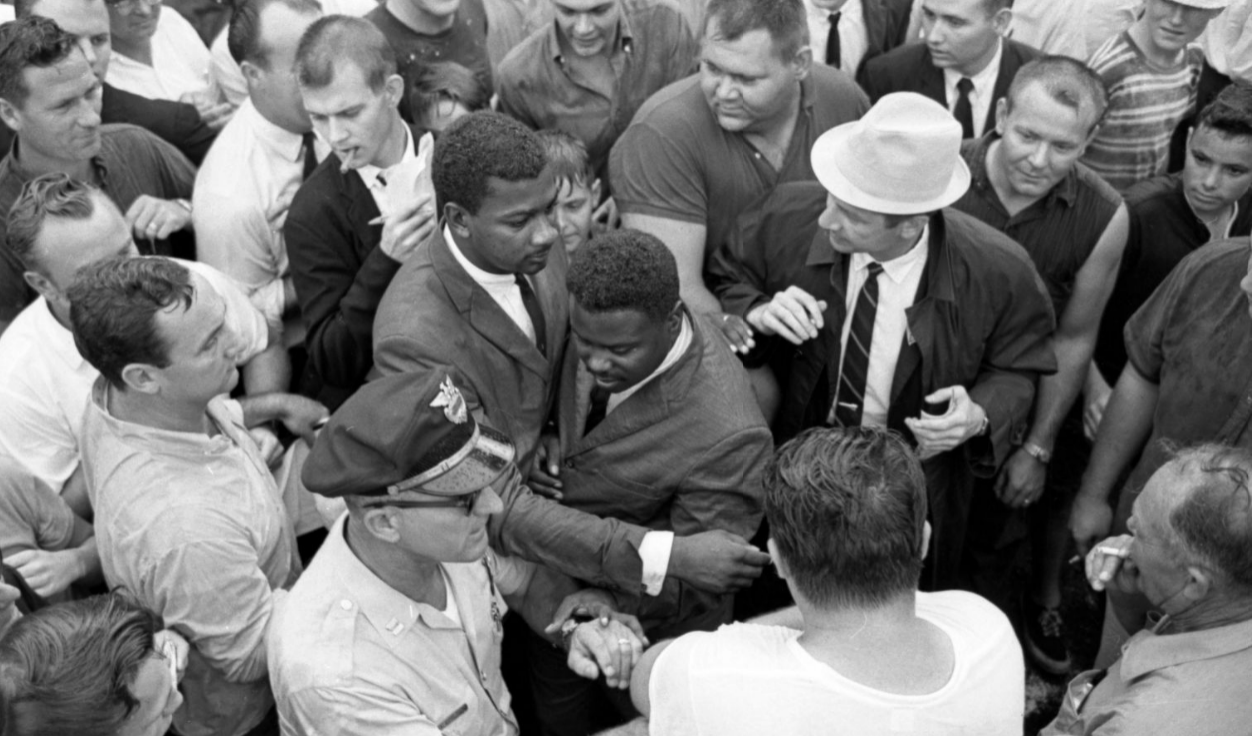
Crowd forms around segregationist Lester Maddox's restaurant The Pickrick to keep African-Americans from entering the eatery, 1964. Atlanta Journal-Constitution Courtesy of Georgia State University.
Project: Augmented Reality Location Based Storytelling
Design Priorities: Bringing history into the present in an augmented reality project with site specificity
My role: To conduct historic research
Analysis of Additional Issues:
Insufficient holistic historical research from multiple angles (Community, figures, city).
Lack of awareness of the intended audience.
No narrative flow beyond traumatic events.
Solution Set: Using my framework, Humanistic Technopractice which brings voices from multiple communities to ensure that sufficient research has been done on historic events, understands the way intended audiences make meaning with digital media productions, and creates projects with the intention of care for both the project’s goals, in this case, the legacy of the people whose history we were telling, as well as, those who come into contact with the digital installation.

Interventions for On-site Contextualization
Although more research context was available to the design team, it was not all uploaded into the augmented-reality installation. After several on-site user tests, viewers/participants commented that they wanted more context about the protests, the site, and the participants of the protests. Participants also noted that they wanted to know if there were more women and other entities from Atlanta outside of the core group of protesters. Other members of the design team noted that there should be a trigger warning included in the experience because the augmented-reality simulation included violent imagery.
In response, I created two videos in Adobe Premiere Pro introducing the audience to the site, to the protesters, and also included the trigger warning. The video also included a general warning about the nature of augmented-reality experiences and safety at sites and lose spatial awareness to the physical environment around them. The videos were uploaded into Unity to be viewed on-site before entering the A/R experience.
Further Iterations Based on Humanistic Technopractice
Solution Set: Using my framework, Humanistic Technopractice which brings voices from multiple communities to ensure that sufficient research has been done on historic events, understands the way intended audiences make meaning with digital media productions, and creates projects with the intention of care for both the project’s goals, in this case the legacy of the people who’s history we were telling, as well as, those who come into contact with the digital installation.
Based on this research and iterations from the design team. A more extensive narrative flow was implemented into the design which included markers to learn more about each individual noted activist and a timeline of significant dates that lead up to the protest. To view the site experience, please view the video below.
Further recommendations for the design team upon my departure were to create a partnership with the school that the activists came from, creating more institutional buy-in and interest from the larger Atlanta and collegiate communities to view the installation.
Tools Used: Unity, Adobe Premiere Pro, Microsoft Teams, Figma